



























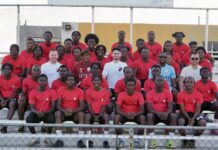




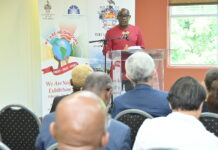

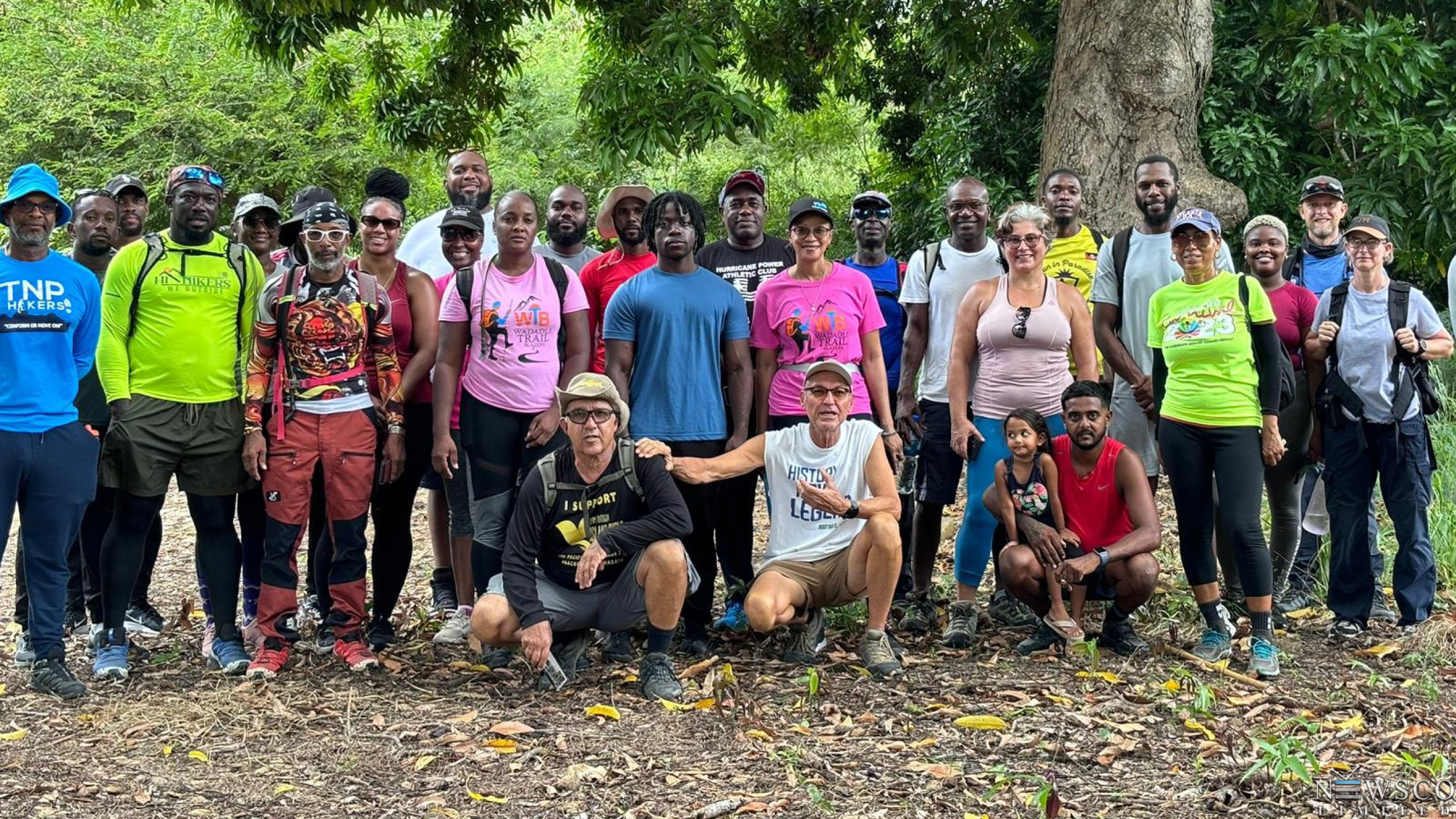
Leaders of various hiking groups across the country took part in a free hiker search and rescue training session over the weekend.
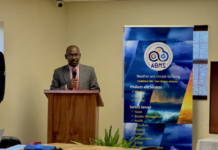
Marco Bava, a director of the Antigua and Barbuda Search and Rescue (ABSAR), in collaboration with the national trail project organisers, and medical professionals from the American University of Antigua (AUA) spearheaded the training.
The session was organized by Rohrman Sports Association (RSA) in response to a recent incident where a hiker got lost for over seven hours along a marked trail above Christian Valley.
The man, a regular hiker, experienced significant challenges navigating the rugged terrain and dense bush, ultimately requiring a rescue.
Rory Butler, head of the Rohrman Sports Association, was the only person the man was able to call and speak to briefly about his situation before his phone died.
This prompted Butler, who was in Barbados when he received the call, to coordinate with multiple people including the Antigua and Barbuda Search and Rescue (ABSAR) to organize a rescue mission.
Dehydrated and running low on water, the hiker eventually had to climb a tree to get his bearings to successfully return to his car where the impromptu rescue team had met to start the search.
Alistair Savoury, a member of the Rohrman Sports Association (RSA), an avid hiker and mountain biker, was one of the main people organizing the search on the ground in Antigua.
He told Observer, “We need something other than relying on just the police and the defence force for these sorts of situations because that ties up taxpayers’ money. That sends officers or constables that could be doing police work up into the hills or whatever looking for somebody.”
He explained that while ABSAR specializes in a wide variety of search and rescue operations, here in Antigua, they primarily deal with people stranded at sea.
Because of this, and the fact the leaders of hiking groups would be better equipped to land searches, “We felt that this is something that we could do without having to get the police and the defense force involved necessarily. We’d certainly alert them to a situation if it arises, but we would be in a better position to initiate a search party to go and search and possibly rescue an individual or stranded individuals.”
Bava told Observer, “Our primary area of operation is marine search and rescue, we do have some land search and rescue experience and training. There’s a group of hikers out there and they are the natural choice for the best search and rescue people, because they have so much local knowledge out on the trails. So it occurred that we could give those guys a little bit of knowledge that would make them very effective for any future lost hiker situations.”
“We simulated two different types of searches that are very common, easy and very quick to put together. We talked about how to organize a group of volunteers who may not have ever worked together, how to become an effective search and rescue team. We talked about how to communicate when you guys are spread out through the trails and in the woods, a couple of techniques that you can use to cover large areas and find people, and then just how to organize and manage all your resources as effectively as possible.”
Savoury added that the medical professionals from AUA offered different courses like CPR training as well.
He further explained that while they don’t have a full-blown long-term agenda laid out, they have decided to create and keep a WhatsApp group with the people who were organizing the search and the people who attended the training session should any future calls about hikers in need of rescue.
He also said they have plans to potentially start assisting with searches for people who have been reported missing.