
















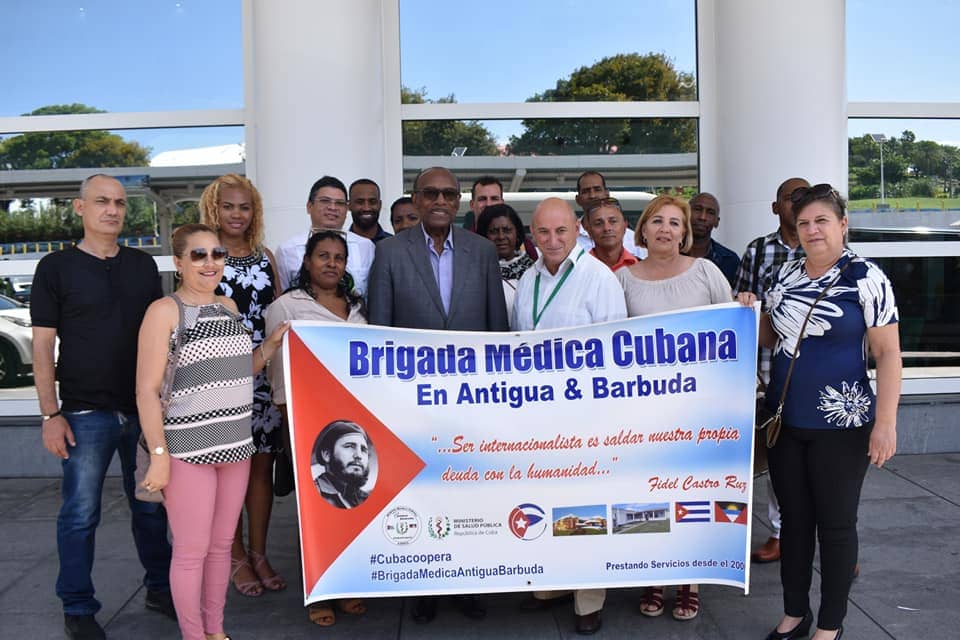
JAMAICA GLEANER- Caribbean Community (CARICOM) foreign ministers met on Friday to discuss the United States’ decision to revoke the visas of foreign government officials whose countries employ Cuban doctors and nurses.
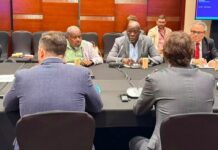
On the morning of Friday, February 28, as Minister of Foreign and CARICOM Affairs, I represented Trinidad and Tobago at a special meeting of CARICOM’s COFCOR, which is our Council for Foreign and Community Relations,” Dr Amery Browne said.
“This meeting was convened specifically to discuss a CARICOM response to the announcement from the State Department regarding states working with the Cuban medical brigade,” Browne added.
Earlier this week, US Secretary of State Marco Rubio said Washington was announcing “the expansion of an existing Cuba-related visa restriction policy that targets forced labour linked to the Cuban labour export programme.
“This expanded policy applies to current or former Cuban government officials and other individuals, including foreign government officials, who are believed to be responsible for, or involved in, the Cuban labour export programme, particularly Cuba’s overseas medical missions.”
Rubio, the son of Cuban immigrants who left Cuba in pursuit of the American dream, said in a statement posted on the US Department of State’s website that the new policy also applies to the immediate family members of those supporting the Cuban programme.
“The department has already taken steps to impose visa restrictions on several individuals, including Venezuelans, under this expanded policy,” he added.
Browne said that CARICOM foreign ministers, who met virtually, agreed to seek additional information and clarifications from the US State Department, as most member states have engagements with the Cuban medical brigade.
“Additionally, CARICOM foreign ministers are arranging a meeting with the US special envoy for our region, to take place in Washington in the second week of March,” Browne said.
Regarding Trinidad and Tobago, he stated: “We remain in extremely close contact with the US embassy and our other counterparts and contacts, and we continue to focus heavily on our diplomacy and positive engagements with the US and other partners.
“We are in no rush to assume that Trinidad and Tobago or CARICOM officials are in any way caught up in this intensified focus on Cuba,” Browne added.
Suriname’s Foreign Affairs Minister, Albert Ramdin, noted that “there is a similar view throughout the region that these decisions will impact, in a very direct way, the services countries cannot fund in terms of medical care and so on.
“So there is a common understanding, and I think we all agree as well that we should have a dialogue, a conversation with the United States on an agenda between the two regions on many issues, and this is one of them.”
Ramdin, who participated in the foreign affairs ministers’ meeting, said, “I hope that we can see that happening very soon. We are in the same geographical space, the US is an important partner, and we must ensure that they understand the needs of the region.”
The communiqué issued on Friday following last week’s CARICOM summit in Barbados noted that regional leaders were “gravely concerned with the continuing deterioration of the humanitarian situation in Cuba resulting from the embargo imposed on the people and government of Cuba by the government of the United States of America.