














































The global landscape within which small island economies function is being reshaped. The political dynamics now emerging echo those of the Cold War: powerful nations positioning, courting, and pressuring smaller states. But unlike then, the Caribbean today must approach these dynamics with a more straightforward strategy, stronger institutions, and a sharper understanding of our own interests. In our region specifically, energy supply routes are being protected with new intensity, climate-driven storms are growing more destructive, and global tourism flows are shifting in both volume and character.
For Antigua & Barbuda, these dynamics require not a reaction but a deliberate strategy: planned, sequenced, and executed.
In this shifting environment, both the United States and China are recalibrating their strategic footprint in the Caribbean. Two clear examples illustrate this. China’s recently approved 15th Five-Year Plan (2026–2030) signals a continued commitment to global development cooperation and outward investment. At the same time, the United States has been reasserting its traditional view of the Caribbean as a strategic sphere of influence, modernizing elements of its historic hemispheric doctrine to reflect contemporary geopolitical and energy-security priorities.
China’s 15th Five-Year Plan (2026–2030) was reviewed and approved at the Fourth Plenary Session of the 20th Central Committee of the Communist Party of China, held in Beijing from October 20–23, 2025. The plan places renewed emphasis on high-quality development, expansion of domestic demand, technological self-reliance, and continued global engagement through the Belt and Road Initiative (BRI) and the Beautiful China ecological development framework. As the Honorary Consul of the People’s Republic of China to Antigua and Barbuda stated:
“With nearly 500 million middle-income earners, China’s expanding consumer market presents significant opportunities for Antigua and Barbuda. Chinese consumers will be delighted to access the country’s high-quality products and experiences.”
This is not rhetorical diplomacy — it is a market signal. China’s economic strategy is now oriented toward consumption, improving quality of life, and outward cultural engagement. For countries like Antigua & Barbuda, that means the opportunity lies in building readiness rather than waiting for an invitation.
We are not being asked to choose sides. But we are being required to select a direction.
I offer for consideration four strategic anchors for Antigua & Barbuda’s economic future: diversifying and upgrading the tourism economy, scaling climate-smart housing and resilient infrastructure, transforming the port into a logistics and services hub, and protecting the Caribbean’s identity as a Zone of Peace. These are not separate policy streams. They are interconnected pillars of national resilience and sovereignty.
1. Tourism Diversification: Capturing A Share of the World’s Largest Outbound Market
China remains the world’s largest outbound tourism base. Even during post-pandemic normalization, 1.3–2.3 million Chinese visitors are expected to visit North America (the United States and Canada) annually.
Antigua & Barbuda can position itself to capture a small but high-value segment of this movement. If we secure just 2% of the Chinese travellers currently routed to the U.S. and Canada, that equates to approximately 26,000–46,000 new stay-over visitors per year. Given our five-year average of roughly 280,000–320,000 stay-over arrivals, this would represent a 10–15% increase, driven by a market segment known for longer stays, higher per-visitor spending, and strong interest in culture, heritage, gastronomy, wellness, and learning travel.
To turn this potential into demand, our tourism product must be purposefully aligned with long-haul cultural travellers. This doesn’t require reinventing our national tourism identity; rather, it involves enhancing the current luxury and all-inclusive offerings with high-quality experiences that showcase Antigua & Barbuda’s heritage, community life, and cultural character. There is opportunity for growth through heritage-based experience development and deeper interpretation of our historical and cultural assets. Our existing hospitality infrastructure can be expanded to support cross-cultural engagement. More curated and meaningful visitor journeys, seamless travel paths, and guest environments that feel welcoming, confident, and foster genuine connections.
The objective is market stability and value resilience.
2. Climate-Smart Housing & Urban Renewal: Building for the Storms We Now Face
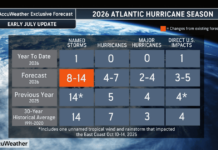
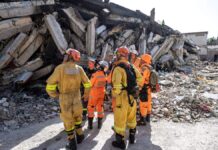
The visible destruction from Hurricane Melissa and the growing intensity of Caribbean storms underscore an unavoidable reality: the intensity baseline has shifted. We must now build for a new category of storms, not the old one.
This directly affects the construction industry and infrastructure planning.
China’s 15th Plan and the Beautiful China Initiative prioritise ecological protection, resilient cities, modernized public infrastructure, and community-centred development. These principles align naturally with Antigua & Barbuda’s structural vulnerabilities and long-term housing needs.
3. The Harbour and the Logistics Economy: Moving From Capacity to Value
The expansion of the St. John’s Harbour under China’s Belt and Road Initiative created significantly enhanced capacity in cargo handling, container storage, and vessel access. However, infrastructure capacity alone is not sufficient. To date, there has been no corresponding upgrade in systems, regulations, or service capabilities to unlock the port’s full economic potential.
There is now a window of opportunity to transition the port from a primarily import-oriented facility to a regional logistics platform. Antigua & Barbuda can position the port to serve as:
- A sub-regional transshipment hub for OECS cargo flows
- A marine and yachting provisioning logistics node, complementing existing yachting centres by expanding service capacity and supporting larger, more modern fleets
- An e-commerce cross-docking gateway, enabling the rapid transfer of small freight and online orders from incoming carriers to outgoing regional connections without long-term storage
4. U.S. Security Posture and the Tourism Brand Risk
The United States has increased maritime and security engagement in the Caribbean. From my spectator’s chair, this aligns with its long-standing view of the region as a strategic sphere of influence. It reflects contemporary concerns about energy security, trade routes, and geopolitical counterbalance, rational priorities for a major power.
However, for small island states like Antigua & Barbuda—open, service-based, tourism-dependent economies with limited defence capacity—the visible form of military engagement matters as much as the underlying intent. Our foreign policy is inherently rooted in diplomacy, not force, and is reinforced through carefully managed alliances that protect sovereignty without creating strategic entanglements.
Our Caribbean value proposition is the _Zone of Peace_ brand. We are a destination associated with rest, emotional ease, and mental relief. Tourism is not simply an industry—it relies on visitors believing they are entering a place removed from global tension. If our region begins to feel, or function like a strategic frontier, the consequences are direct:
- Lower long-stay and high-value visitor demand
- Reduced investor confidence in tourism and real estate assets
- Rising insurance premiums and financing costs for hotels and developments
- A weakening of the Caribbean’s most valuable brand asset: tranquillity
This is not theoretical; it is economic risk in real time. Our foreign policy must therefore be explicit: Presence is acceptable; militarization is not. Cooperation is welcome; forward staging is not. For Antigua & Barbuda, peace is an industry—and safeguarding it is a matter of national interest and national income.
5. Strategic Actions for Government, Private Sector, and Regional Partners
Coordinated action, not new spending, is the decisive factor. Since the institutional and physical assets already exist, what is now required is alignment, sequencing, and clarity of mandate. The strategic choices ahead are therefore not about building new layers of bureaucracy or pursuing large-scale capital undertakings, but rather about ensuring that the parts of the system already in motion are working together toward the same outcome.
Conclusion: Designing Our Future Position
The strategic question ahead is not whether change is necessary, but how we choose to shape it.
Antigua & Barbuda cannot control the geopolitical competition around us, but we can control how we position ourselves within it. Our future stability requires:
- A diversified, high-value tourism market rooted in culture and meaningful experience
- Climate-resilient housing and infrastructure to protect lives and investment
- A logistics-enabled port economy that creates value beyond imports
- A maintained Zone of Peace, recognizing peace as a core economic asset
Together, these choices form the basis of a stable, competitive economy—a forward-looking, self-determined path for a small nation in a reshaping world.
_Petra Williams is a Caribbean special features writer whose work is featured regularly across Antigua and Barbuda’s media and occasionally throughout the wider region. As founder of petrathespectator.com and publisher of The Spectator magazine, she blends history, culture, and economic insight into stories that celebrate and connect her twin-island home._