




























































By Kisean Joseph
Some people may think monitoring nesting sea turtles is a tedious or time-consuming task.
Some I know have even called it boring, but for me being at the heart of conservation is exciting – to know the seemingly small actions and steps taken today may secure and preserve a keystone species, which is in no small part responsible for the regulation of our marine ecosystems and maintenance of jellyfish populations.
So how does it happen? First, you have to receive training to handle and interact with these specially protected and endangered animals to ensure, when the time comes, you’ll know how to measure them, what to look for, and generally how to conduct yourself to ensure the turtle isn’t being stressed.
Then onto your first patrol which, from my experience, can be a mixture of excitement and dismay. There is truly no control over when a turtle chooses to come ashore and nest. As monitors, our best bet is to be present on the beaches awaiting their emergence.
You may wonder what you are going to do while you wait for ages, it seems, for a turtle to emerge from the sea and begin the 30-plus minute task of finding the right spot, digging the hole and beginning the laying exercise which can take up to an hour to complete.
My turtle monitoring expeditions have fortunately featured very passionate and involved leaders, eager to share real world applications to complement the theoretical training I received prior.
There are seven different species of sea turtle that grace the world’s oceans, from the shallow seagrass beds, to the colourful reefs, and the sandy beaches of the Eastern Pacific. While these highly migratory species periodically come ashore to either bask or nest, sea turtles spend the bulk of their lives in the ocean. It’s important to note healthy male sea turtles rarely return to shore after they hatch.
Of those seven species, there are three that nest in Antigua and Barbuda. These are the green, hawksbill and leatherback turtles. You may ask yourself, what is the significance of these marine animals?
Sea turtles play a vital role in marine ecosystems. They help maintain the health of seagrass beds and coral reefs, that then benefit commercially valuable species like shrimp, lobster, and tuna. Sea turtles are the live representatives of a group of reptiles that have existed on Earth and travelled our seas for the last 100 million years.
In my experience I have seen all three species at different times. The first turtle I saw was a hawksbill and she nested in the most unusual place along the walkway of a restaurant, in more dirt than sand. Then there was a massive green.
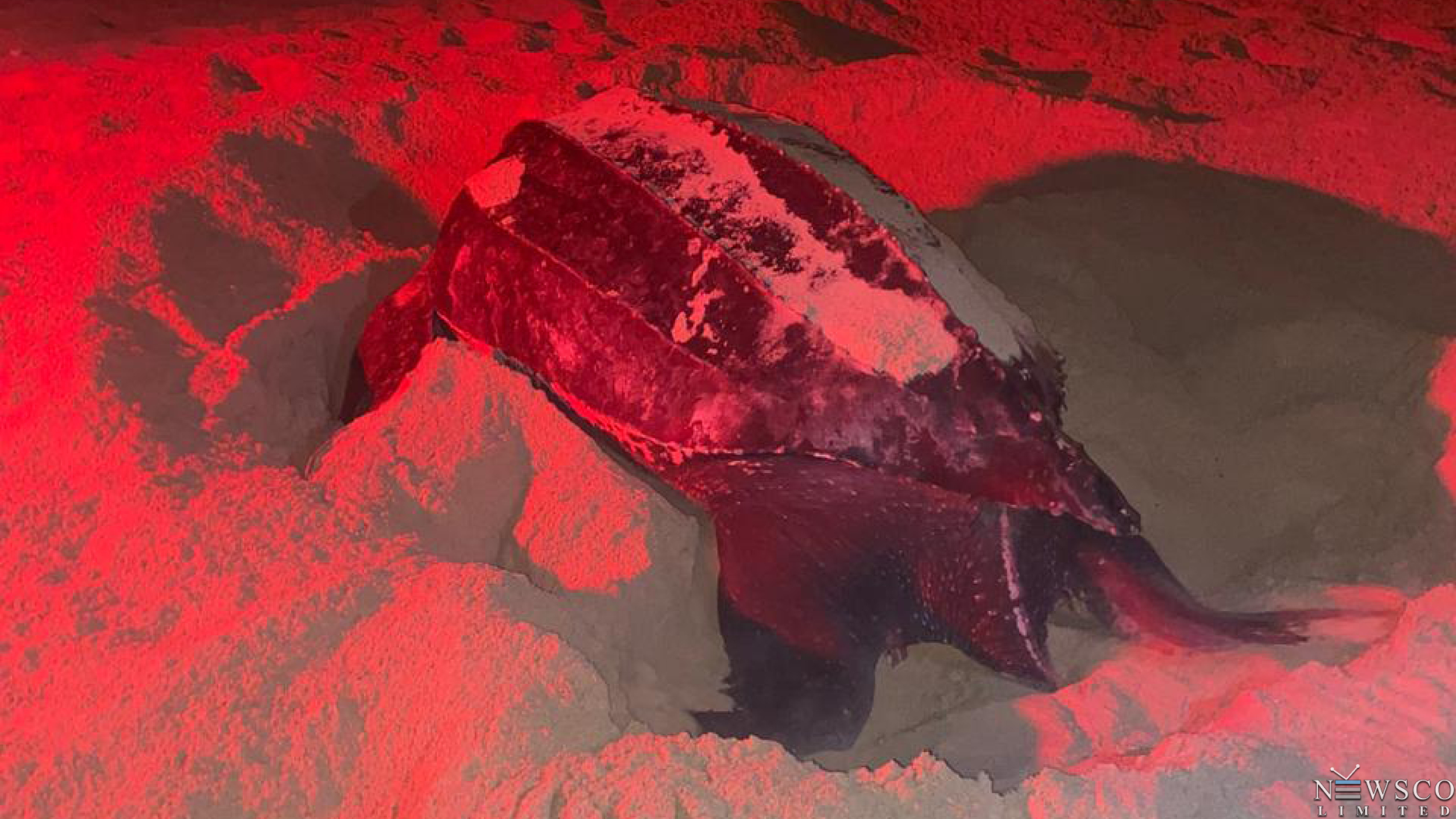
One morning at 3am I got a call from a fellow monitor to run down to the beach and there was a majestic leatherback, so large I got slapped with sand as I watched it nest.
After I was seasoned, next came a nest excavation. We had to save the clutch by opening the nest cavity and removing the juveniles. Not all survived. It’s important to remember that the rate at which hatchlings make it to adulthood is one in 1,000.
This is also why monitoring exercises are important to protect against predation and other forms of ultimate annihilation. All turtles are very important to their ecosystems and endangered globally. They need our help and they need our active intervention. Do you have what it takes?
There is a 24-hour sea turtle hotline monitored by the EAG. If you see sea turtle activity, call 736-TURT (8878).