

























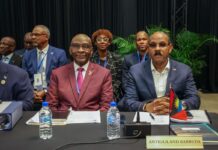


















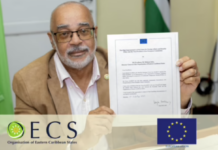


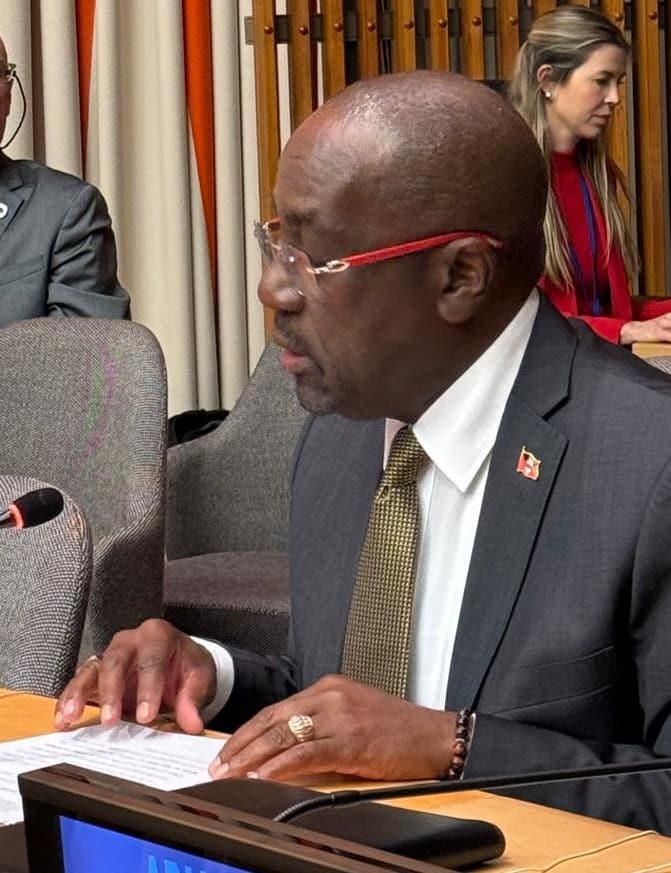
ABLP Chairman and Foreign Affairs Minister EP Chet Greene is calling on CARICOM to urgently engage the United States in renegotiating trade arrangements, warning that existing frameworks have been rendered ineffective by a wave of unilateral U.S. tariff policies.
Speaking on Pointe FM over the weekend, Greene said that recent moves by the U.S. government to impose a 10% tariff on imports from nearly all countries—including small Caribbean nations—have upended longstanding trade expectations and created deep uncertainty across the region.
“Anything that was in existence prior to President Trump signing these new orders is now of nullity,” Greene said. “CARICOM will now have to sit with the U.S. government to carve out some sort of consideration for Caribbean goods.”
Although a 90-day suspension of the tariffs was later announced, Greene warned against complacency, arguing that the region cannot afford to wait and hope for stability from what he described as an erratic and unpredictable trade regime.
“Let us treat this most recent announcement as we did the one prior to the suspension,” he said. “We must act as though these tariffs are in place and move now to protect our economies.”
Greene explained that while Antigua and Barbuda does not export significant volumes to the United States, the implications of the broader tariff structure are far more serious—particularly in the areas of tourism, consumer goods, and industrial inputs.
“The real concern is tourism—our bread and butter,” he said. “If the U.S. economy softens because of these trade wars, American consumers will have less disposable income to travel. And when that happens, we feel the blow directly.”
Greene also highlighted the potential impact on fledgling industries in Antigua and Barbuda, noting that entrepreneurs relying on imported materials could be priced out of business if costs rise.
“Tariffs on Chinese goods, for example, drive up the cost of raw materials for local businesses. That’s not just theory—it’s reality,” he said.
He urged CARICOM member states to adopt a unified stance in discussions with the United States, emphasizing that regional solidarity is essential to achieving exemptions or special considerations.
“We need to be clear-eyed about the fact that these decisions are not about us, but they affect us—sometimes disproportionately,” Greene said. “Only through coordinated diplomacy can we hope to protect our interests.”
Greene’s comments come as international trade institutions struggle to respond to a surge in protectionist measures and shifting alliances. He noted that even multilateral frameworks such as the WTO are under pressure, leaving smaller nations increasingly vulnerable.
“This is a time for strategic diplomacy,” he said. “But it’s also a time to build resilience. We must explore new trade lanes, strengthen intra-regional commerce, and ensure that we’re not solely dependent on one market.”
While acknowledging the difficulties ahead, Greene expressed confidence that Caribbean cooperation could provide a path forward.
“We’ve done it before. We can do it again. But we must act quickly and with purpose,” he said.