

Judge Jan Drysdale found a way to establish that the landmark case R v Bourne, 3 All E. R. 615 (1938), applies here. This is very welcome news for pro-choice advocates.
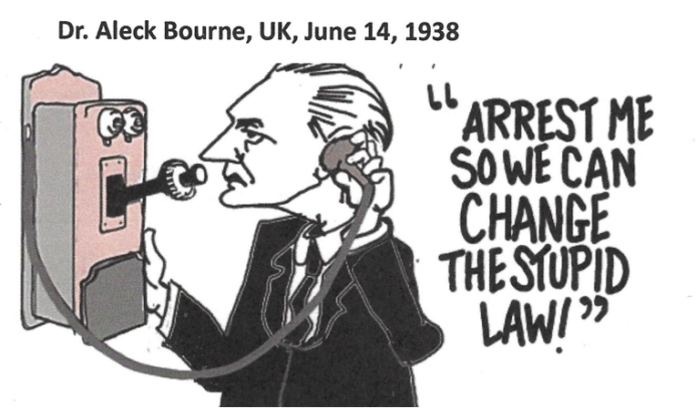
Here is the story: In England in 1938, a 14-year-old girl was pregnant. She had been raped by five officers of the Royal Horse Guards. Along with her parents, she sought an abortion.
At that time, there was an Interdepartmental Committee on Abortion. Aleck Bourne, a distinguished gynaecologist, was keen for the Committee to appreciate the dire circumstances doctors encountered.
He examined the girl and was satisfied that she was sufficiently developed physically to carry the pregnancy to term. It was not a threat to her life. Abortion was legal only to save the life of the woman.
Nevertheless, Bourne performed the abortion at no charge. He then promptly called the Chief Constable and reported his unlawful action.
In Court, his defence was that if he had not performed the abortion, the girl would have become a “mental wreck”.
In his instructions to the jury, Justice Macnaghten spoke of his own difficulties of distinguishing between life and health. The jury acquitted Bourne.
In paras 64-69, Judge Drysdale makes a compelling case that section 2 of the Common Law (Declaration of Application) Act imports UK common law to our shores. This reception of the 1938 Bourne ruling clarifies the word “unlawfully” in Sections 56 and 57 of the OAPA by allowing exceptions for lawful abortions.
This is wonderful news. It is a huge expansion of the grounds for legal abortion: we are no longer limited to saving only our lives, we can now have lawful abortions to protect our physical and mental health. That gives us a much bigger window.
Sincerely,
ASPIRE
Source: Antigua News Room LETTER: High Court, Bourne, and Abortion.